
Choosing Microcement Colours and Finishes: A Sample Checklist
A microcement colour can look promising on your phone and quite different beside the kitchen cabinets you have already chosen. Before committing to a finish, separate three decisions: the colour, the visible texture and the level of sheen. A physical sample gives you a better starting point for that conversation than an inspiration photograph alone.
This guide is for homeowners, designers and architects choosing microcement colours and finishes for projects in Leeds, Bradford and across West Yorkshire. It focuses on agreeing the appearance, rather than the building work or application programme.
Start with the materials that will stay
Gather the fixed parts of your scheme first: a cabinet door sample, worktop offcut, tile, timber floor sample or fabric swatch. If something cannot be moved, take clear photographs and note its product name. Treat those photographs as supporting information, not an exact colour reference.
Then decide what role the microcement should play. Do you want a quiet background for patterned furnishings, or a surface with more visible movement? Should the walls and floor feel closely related, or should there be a deliberate contrast? Answering those questions helps narrow the choices before you compare individual shades.
Choose a small shortlist. A warm neutral, a cooler alternative and a stronger contrast are easier to discuss than a folder of twenty unrelated interiors. Describe what you like about each example, such as its tone or the subtlety of the texture.
Check colour, texture and sheen separately
A colour name does not describe the whole finish. When discussing samples, use three separate notes:
- Colour: the shade you are considering and how it sits beside the other materials.
- Texture: how much hand-applied character or visual movement you want to see.
- Sheen: the amount of reflected light you prefer in the finished surface.
Ask which combination is suitable for the proposed room and surface. Do not assume that every appearance shown in a photograph is available in every product system or appropriate for both walls and floors.
Voytec’s microcement service page includes an Efectto PU colour palette. Use it to identify possible shades for your enquiry; the on-screen colours are indicative. Topciment’s Efectto PU product information sets out the manufacturer’s colour range and system guidance. Confirm the actual specification for your project before treating a visual preference as a final product choice.
Look at a physical sample in the room’s lighting
Ask to see a physical example of the proposed finish. Establish what it represents: the colour, the texture, the completed surface, or only one stage of the system. A sample is most useful when everyone understands exactly what is being compared.
Where a sample is available to view in the property, look at it in daylight and under the lights you normally use in the evening. Place it beside the materials that will meet it. For a wall finish, view it upright; for a floor, look down at it from a normal standing position. Move around the room rather than judging it from one close-up angle.
If you are viewing finishes away from the property, bring your other material samples and explain the room’s lighting. Note any planned changes, such as new downlights or a different worktop. Avoid approving a shade solely from a photograph taken during the visit: a camera and screen introduce another layer between the sample and the decision.
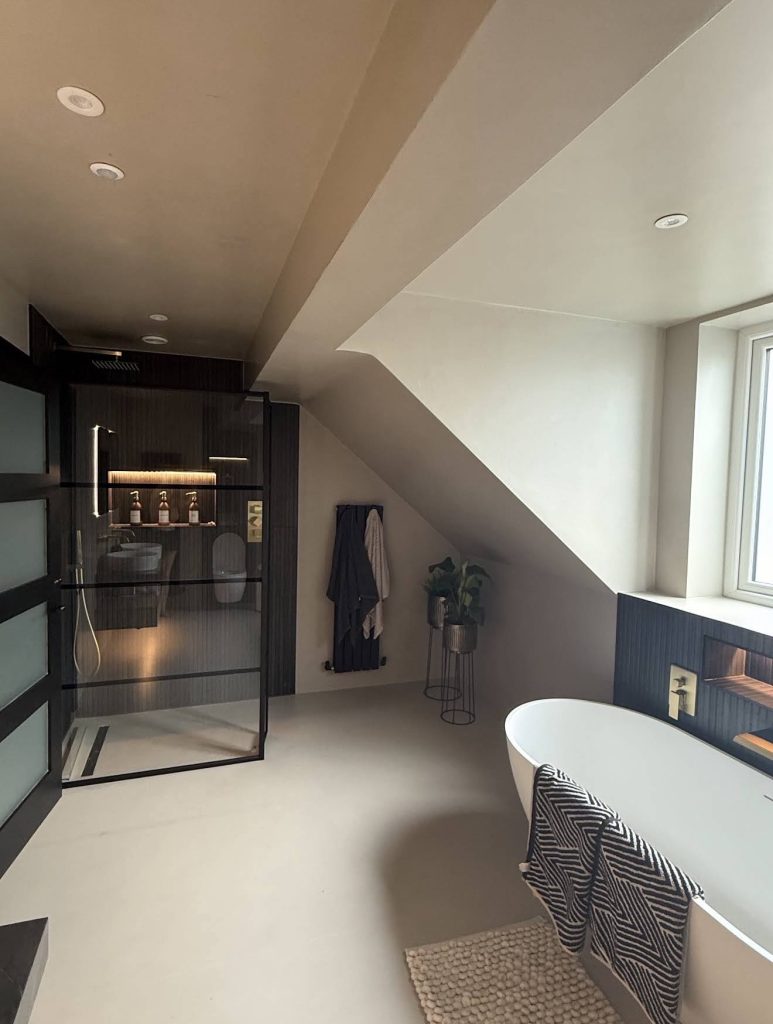
Use a sample as a reference, not a repeat pattern
A small board cannot show every detail of a hand-applied surface across a whole room. Discuss the level of variation you find appealing and ask how the sample relates to a larger area. Point out both what you like and what you would prefer to avoid in your reference images.
For example, “a pale background with gentle movement” communicates more than “like this picture”. If you prefer a very uniform appearance, say so early and ask whether the proposed finish is a good match for that expectation.
Keep the design discussion separate from the suitability assessment. Liking a sample does not confirm that the existing floor or wall is ready for application, or that a particular finish meets the requirements of a wet area. Those points need to be considered as part of the project specification.
Record one agreed finish reference
Once the choices have been discussed, keep a short written record. This is particularly useful when an architect, interior designer, contractor and homeowner are all involved. It reduces the chance of different people working from different photographs or an earlier colour choice.
Your record can include:
- The room and the exact surfaces being considered.
- The product system and colour reference discussed with the installer.
- The agreed texture and sheen, with a clearly identified sample where available.
- The adjoining materials used during the comparison.
- Any lighting or design decisions that are still outstanding.
- Who will confirm the final selection and communicate later changes.
For a show home, include the planned furnishings and lighting in this discussion. A finish should be reviewed as part of the complete interior, not only against a bare wall before the styling arrives. Keep any later specification changes together with the original reference so the project team can see what has changed.
Prepare for a useful finish consultation
Bring your shortlist, room photographs, approximate measurements and any drawings you already have. Explain how the space will be used and which materials are already fixed. If several rooms are involved, our multi-room microcement planning checklist covers the separate questions of substrates, thresholds and trade coordination.
You can compare finishes in person at Voytec’s Shipley showroom. Visits are by confirmed appointment, so arrange the visit and wait for confirmation before travelling.
Contact Voytec Decorator to discuss your microcement project. Send your postcode, photographs and preferred colour references. The aim is to agree a clear visual brief alongside the requirements of your particular walls or floors, before settling on the final finish.
